Fast track assessment for experienced construction site managers
No learning curve
— Designed around the work you already do
No Written Answers
— Your assessor asks. You simply talk about your work.
No online portfolio nightmare
— We analyse and map your evidence.
Accredited by
We'll email your PDF within 2 minutes.
Our Clients
We're trusted by...
What our candidates say about Up Level
5.0
Top rated on Google · 243 reviews
The NVQ Experience You Actually Want
Don't break the bank:
Manageable, affordable, interest-free payment plan with instant approval and no 3rd-party finance involved. From just £219.50/mo.
Customise your plan, up to 12 months
Money-Back Guarantee:
If you FAIL, you get 100% of your money back. Your success is OUR shared mission.
Enrolments strictly subject to eligibility screening
No Written Answers:
Your assessor asks about the work you already do, then documents your answers. No question sheets to fill in at home.
You provide the evidence. We work out where it belongs.
Busy and unpredictable schedules:
We have a proven and time-tested system to manage that. No judgment for rescheduling sessions.
The busier you are, the better
Respecting the Non-Academic Mind:
We speak in simple language and cut academic terminology. We relate all questions to your industry experience, ensuring relevance and clarity.
Tailored service with a personal touch
No online portfolio nightmare:
We understand you don't want the extra job of first learning a new platform, then spending evenings matching every document to the right criteria and uploading it, only to find out days later that it isn't accepted and that you have to do it again.
Communicate with a real person instead
NVQ Level 6 Diploma in Construction Site Management
: Everything You Need to Know
NVQ Level 6 Construction Site Management: Entry Requirements
There are no formal entry qualifications for this NVQ. You do not need a prior NVQ, you do not need GCSEs, and you do not need a National Insurance number to register.
What is required is experience. This is a competence-based assessment, not a training course. You must be working, or have recently worked, in a site management role, typically with five or more years in construction, and you must be able to evidence that work. An assessor confirms your eligibility during screening, before you pay anything.
From all site management qualifications, this is the most comprehensive, unit-heavy qualification for experienced site managers.
You are expected to have hands-on experience in organising and managing site setups, health and safety, progress meetings, resources, planning, quality control, and handover of large construction sites and projects.
Your main responsibilities include managing daily site operations, organising H&S, and supporting teams to deliver projects on time and within budget.
During the assessment, you must demonstrate practical skills and knowledge of site management duties by providing evidence and examples from current or previous projects.
Your evidence should show your ability to:
Control project costs and procurement and implement monitoring procedures
Collect and analyse Health and Safety information, apply safe methods, and maintain H&S awareness and culture on site
Develop work programmes and schedules for contractor activities and adjust them for the project duration
Plan and organise work activities according to the project programme and allocate tasks to subcontractors and workforce
Manage monitoring and reporting systems to track progress and minimise disruptions
Organise, participate in, or chair regular site progress meetings
Plan site layout for work activities, traffic, and resource storage
Develop and manage environmental protection procedures
Devise and implement quality control procedures with appropriate reporting systems
Plan and organise the supply of resources and manage monitoring systems
Different companies use different information and documentation. You should explain, with evidence, how you organise, manage, and execute your site management duties.
Your assessor, a chartered member of the Chartered Institute of Building (CIOB), will confirm during screening that the Building and Civil Engineering pathway aligns with your role, or recommend another pathway if needed.
* On completion, apply for a Black (Managerial) CSCS card!
* To apply for a CSCS card, you must have a valid H&S test, passed within the last two years.
Which NVQ Level 6 Site Management Pathway Do You Need?
The NVQ Level 6 Diploma in Construction Site Management is not one qualification with one fixed set of units. It has seven pathways, and the optional units change depending on which one fits your role. Choosing the wrong one means gathering evidence you cannot use.
The seven pathways are Building and Civil Engineering, Highways Maintenance and Repair, Residential Development, Traditional and Heritage Building, Demolition, Tunnelling, and Retrofit.
This page covers the Building and Civil Engineering pathway, which is the default and most common route for site managers running building and civil engineering projects.
Your assessor confirms the pathway during screening, before you pay. If Building and Civil Engineering is not the right fit for the work you actually do on site, they will tell you which pathway is.
Building and Civil Engineering
The default pathway for site managers running general building and civil engineering projects: new build, refurbishment, infrastructure, and multi-discipline sites where you coordinate trades, subcontractors, and programme delivery on behalf of a main contractor or large specialist.
Highways Maintenance and Repair
For site managers whose work centres on highway schemes, road maintenance, resurfacing, and repair contracts, typically for local authorities, frameworks, or specialist highways contractors rather than traditional building sites.
For site managers delivering housing, apartments, and residential-led schemes, where evidence reflects housebuilding programmes, plot sequencing, and the management of residential subcontractors and buyers' completion stages.
Traditional and Heritage Building
For managers working on conservation, restoration, and heritage projects where methods, materials, and planning constraints differ from standard new-build delivery and optional units reflect traditional building practice.
Demolition
For site managers leading demolition operations, where the role involves planning controlled dismantling, managing specialist plant and hazardous materials, and coordinating safe clearance ahead of new works.
Tunnelling
For managers on tunnelling and underground works, including shafts, drives, and associated civils, where site management evidence reflects confined environments, specialist temporary works, and tunnelling-specific health and safety controls.
For site managers leading retrofit, refurbishment, and energy-upgrade projects on existing buildings, where evidence reflects decarbonisation works, occupied buildings, and coordination with specialist retrofit trades.
Is NVQ Level 6 Equivalent to a Degree?
It sits at the same level. It is not the same qualification.
The UK's Regulated Qualifications Framework places every qualification at a numbered level. GOV.UK's official list of Level 6 qualifications includes, side by side and at the same level: a degree with honours (BA Hons, BSc Hons), a degree apprenticeship, a graduate diploma, an ordinary degree without honours, a Level 6 award, a Level 6 certificate, a Level 6 diploma, and a Level 6 NVQ.
So when a job advert asks for "a degree or equivalent", a Level 6 NVQ is precisely what that phrasing is designed to accommodate. What it does not do is entitle you to call yourself a graduate or to put BSc after your name. The certificate reads NVQ Level 6 Diploma, and that is what it is.
For most site managers the distinction matters less than what the qualification unlocks. It satisfies CSCS for the black Manager card, and it satisfies the Chartered Institute of Building's academic requirement for chartered membership. It does both.
Fast Track NVQ Level 6: Qualified in 4 to 6 Weeks
Fast track is included as standard, not sold as an extra. With it, the target is completion within 4 to 6 weeks. You get priority status and your assessor builds a plan around your working schedule to hit that window. If things stall, expect a friendly phone call.
Two conditions apply, and they are worth stating plainly. You need to be motivated and willing to work with your assessor, and you need evidence available. The speed comes from the evidence your job already generates, not from any shortcut in the assessment.
Fast track does not lower the standard. You are assessed against the same criteria, the same units and the same depth of evidence as anyone else. What changes is how efficiently you can demonstrate competence you already have.
Once your assessment is complete and the portfolio goes to the awarding body, certification typically takes up to 15 working days, though this varies with the awarding body's workload.
What the NVQ Level 6 Covers: All 20 Units
To achieve the NVQ Level 6 Diploma in Construction Site Management – Building and Civil Engineering, you must complete a minimum of 20 units: 19 mandatory units plus at least one optional unit that aligns with your job role.
Before starting the assessment, during screening and assessment planning, you will review the units with your assessor to confirm this pathway and choose the optional unit that best matches your evidence.
Mandatory Units (19)
Mandatory Units · 19 units
Unit Title
Level
Allocating Work and Monitoring People's Performance in the Workplace
6
Contributing to the Identification of a Work Team in the Workplace
5
Controlling Project Progress Against Agreed Programmes in the Workplace
6
Controlling Project Progress Against Agreed Quality Standards in the Workplace
6
Controlling Project Quantities and Costs in the Workplace
6
Developing and Maintaining Good Occupational Working Relationships in the Workplace
3
Ensuring that Work Activities and Resources Meet Project Work Requirements in the Workplace
7
Establishing Dimensional Control Criteria in the Workplace
6
Establishing, Controlling and Monitoring Environmental Factors and Sustainability in the Workplace
6
Establishing, Implementing and Maintaining Organisational Systems for Managing Health, Safety, Welfare and Wellbeing in the Workplace
7
Evaluating and Confirming Work Methods in the Workplace
7
Evaluating Feedback and Making Recommendations in the Workplace
6
Identifying and Maintaining Communication Systems and Organisational Procedures in the Workplace
6
Identifying, Allocating and Planning the Deployment and Use of Plant, Equipment or Machinery in the Workplace
6
Managing the Installation, Maintenance, Monitoring and Removal of Temporary Works in the Workplace
6
Managing Your Personal Development in the Workplace
6
Monitoring Project Activities in the Workplace
6
Organising, Controlling and Monitoring Supplies of Materials in the Workplace
5
Planning the Preparation of the Site for the Project in the Workplace
7
Optional Units, Building and Civil Engineering Pathway
Optional Units · Building and Civil Engineering pathway · min. 1 required
Unit Title
Level
Enabling Learning Opportunities in the Workplace
5
Managing the Project Handover in the Workplace
6
Planning Activities to Traditional and Heritage Buildings and Structures in the Workplace
6
Planning and Scheduling the Maintenance Activities of Property, Services or Systems in the Workplace
6
Planning Demolition Activities in the Workplace
7
Planning Tunnelling Activities in the Workplace
6
Unit counts vary by pathway, and some published unit lists for this qualification are inaccurate. For the Building and Civil Engineering pathway the structure is 19 mandatory units plus a minimum of one optional unit, giving a minimum of 20 units in total. The full unit titles and their individual levels are listed above.
How the NVQ Level 6 Assessment Works
Usually, it takes 2 assessment sessions to cover the site management assessment criteria. Depending on the quality of evidence we receive from you and your personal circumstances, these sessions may involve a site visit.
Although the assessment process can vary depending on your package selected at the time of your booking (for options, see the booking form), we can outline typical steps you can expect during your assessment. However, given the dynamic nature of our industry, we always strive to adapt the process to suit your individual situation.
For simplicity, let's break down the process of a typical construction site management assessment into six chronological steps.
1
Introduction
You will receive an instructional email as startup guidance, which will include a list of product evidence examples and suggestions for effective collaboration methods with your assessor. This will help you identify the evidence you need to compile for your assessment portfolio.
2
Welcome Call
You will arrange an induction call (usually a video call) to discuss the assessment requirements, your work, and the product evidence from your current or previous jobs. During this call, you'll agree on the next steps and gain a clear understanding of what you need to do to prepare for the first assessment session. The assessor will also email you any required course materials.
3
Compile Evidence
Based on the guidance and advice provided by the assessor, you will start compiling evidence (if not already available) for the first assessment session.
4
The Assessment
Once you have gathered sufficient evidence for the first session, you will arrange a video call to discuss all the files and explain your work process and methods. The first session is generally designed to cover around 50% of the assessment criteria.
5
Assessment Progress
Following the first session, the assessor will review all the evidence and conduct a gap analysis to identify the remaining criteria. You will receive feedback on the necessary steps to address these criteria. Once you have gathered the additional evidence, you can arrange your next session, which may involve an onsite visit or a video call based on the evidence quality and your circumstances.
6
Completion
During this session, our goal is to address all the remaining criteria to complete your assessment. In most cases, this marks the final session. Once we have covered 100% of the assessment criteria, we will compile and finalize your portfolio. Then, we will proceed to claim your NVQ achievement from the Awarding Body.
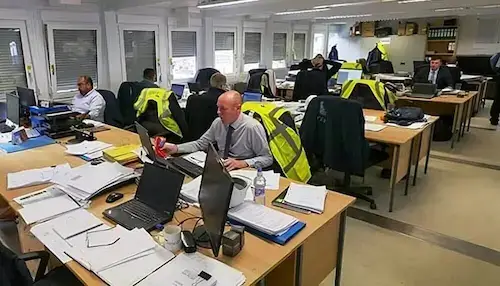
Site manager reviewing paperwork and drawings at a busy construction site office
This qualification is officially recognised by the Chartered Institute of Building (CIOB).
Key facts for NVQ Level 6 Diploma in Construction Site Management
Official title
NVQ Level 6 Diploma in Construction Site Management – Building and Civil Engineering
Also known as
NVQ Level 6 Construction Site Management
Assessment type
Work-based & distance assessment
Prior experience
Required
Classroom attendance
No
Fast Track
Yes
Typical completion
4 to 6 weeks
Remote assessments
Teams & Zoom options available
Dedicated assessor
Yes, with a direct contact number
Guidance & support
Yes, we're here to help
Planning & preparation
Guidance provided
CITB grant claimable
Yes, up to £600
Industry-recognised qualification
Yes, UK and globally
Our coverage
UK and overseas (Africa, Asia, Australia, UAE and Canada)
Qualification level
Same level as a bachelor's degree
Exams
No
NVQ Level 6 Construction Site Management Cost and Payment Plans
The NVQ Level 6 Diploma in Construction Site Management costs £2,195 plus VAT. That is £2,634 including VAT at 20%.
You can pay in full, or spread the cost over up to 12 months from £219.50 per month including VAT. The payment plan is interest-free, approval is instant, and there is no third-party finance company involved.
Every enrolment is subject to eligibility screening before you pay anything, and every assessment carries a money-back guarantee. If you fail, you get 100% of your fee back.
What Is Included in the £2,195
1-Day Registration. All assessments start the same day. If you need proof of registration urgently, we aim to send your registration confirmation within one working day so you can apply for a temporary Experienced Worker (red) CSCS card.
A dedicated assessor with a direct contact number, not a shared inbox.
Assessment planning and gap analysis against every assessment criterion.
Professional discussion sessions, held remotely by Teams or Zoom. A site visit can also be arranged where your circumstances and the evidence call for one.
Portfolio construction. You supply the evidence from your day-to-day work. We analyse and map it against the assessment criteria.
No Written Answers. Your assessor asks about the work you already do, then documents your answers against the assessment criteria.
Fast track, targeting completion within 4 to 6 weeks.
Certification claim to the awarding body on completion.
One option sits outside the standard fee. Mentorship is an optional £500 add-on for managers who need help putting the underlying management procedures and documentation in place, rather than simply evidencing systems they already run.
Total Cost from NVQ to Black CSCS Card in Hand
The NVQ is one of three costs. The other two are paid to CITB and CSCS directly, not to us.
Item
Paid to
Cost
NVQ Level 6 assessment
Up Level
£2,195 + VAT
CITB Health, Safety and Environment test (Managers and Professionals)
CITB
£23.50
Black CSCS Manager card application
CSCS
£36
CITB Short Qualification Grant, if your employer is eligible
Reclaimed by employer
up to £600
The fees shown are correct as of September 2026. Please check citb.co.uk and cscs.uk.com to confirm the current fees.
CITB Grant Funding for the NVQ Level 6
The NVQ Level 6 Diploma in Construction Site Management is covered by the CITB Short Qualification Grant. The grant is paid on achievement, which means after the qualification is completed and certificated, not up front.
The current rate is £600.
A rule change here has not been picked up by much of the guidance still circulating online. Until 31 December 2025, CITB paid an enhanced rate of £1,500 for specific management qualifications. That enhancement has ended. All management and supervision qualifications achieved from 1 January 2026 onwards receive the standard £600 rate. Any higher figure you have read elsewhere is out of date.
Who Can Claim the Grant
The grant is claimed by the employer, not by the candidate. To be eligible, the employer must be registered with CITB and up to date with their Levy Returns.
A registered employer can claim for directly employed staff on the payroll, for business owners and partners, and for subcontractors. That last category is often overlooked. If you use subcontracted site managers, their achievements can still attract grant.
The Short Qualification Grant is payable up to a maximum of four grants at each level per individual, and you can only claim once per individual for the same achievement.
How to Claim It
Claims are made through the CITB Online Services portal within 52 weeks of the achievement date. You will need to attach the achievement certificate or the achievement notification email from the awarding body. The application cannot be processed without it.
If the portal is not an option, CITB accepts claims by email using an individual or bulk application form. For help with eligibility or with the claim itself, CITB Customer Services is on 0344 994 4455.
Up Level is an approved member of the CITB Training Provider Network, and our centre is listed on the official CITB Training Directory.
Grant rates and rules are correct as at September 2026. Confirm current terms with CITB before relying on them.
How to Get Your Black CSCS Card After the NVQ Level 6
The black CSCS Manager card is the card for managerial and advanced technical occupations in UK construction. It is valid for five years.
To qualify for it you need a construction management NVQ at Level 6 or Level 7. The NVQ Level 6 Diploma in Construction Site Management is one of the most common routes taken by site managers.
You also need a valid CITB Health, Safety and Environment test pass for Managers and Professionals. The two together are what CSCS assesses.
The CITB Managers and Professionals (MAP) Test
You must have passed the CITB Health, Safety and Environment test for Managers and Professionals within the two years before you apply for the card.
The test costs £23.50. It runs for 45 minutes and contains 50 questions. There are three versions of the HS&E test (Operatives, Specialists, and Managers and Professionals). For a black card you need the Managers and Professionals version specifically.
Book online through Pearson VUE, by phone on 0344 994 4488, or directly with a local Internet Test Centre. On the day, arrive at least 15 minutes early and bring photo ID that includes your signature. Keep your Score Report afterwards, because it carries information you will need for the card application.
If you need to move the booking, you can reschedule free online up to 72 hours before the test. Rescheduling by phone in the same window carries a £5 fee. You can cancel online for a full refund up to 72 hours before; cancelling by phone in that window costs a £10 administration fee. Inside 72 hours there is no refund either way.
You do not need the MAP test to start your NVQ assessment. You need it to apply for the card. Many candidates book it while their assessment is under way.
Applying for the Black CSCS Card
Apply online through CSCS Online or the My CSCS app. The application fee is £36.
You will need your NVQ certificate, your valid MAP test pass, proof of identity and a recent photograph. Two situations need extra paperwork:
City & Guilds qualifications issued after 1 April 2013. You must submit an electronic certificate showing the qualification details and a certificate authentication code, so CSCS can verify it directly with City & Guilds.
Qualifications gained outside the UK. You will need to contact Ecctis, the UK national agency for international qualifications, and apply for an Industry Skills Statement so CSCS can compare your award against UK standards.
CSCS issues the card, not us. Their application rules apply and can change. Fees quoted are correct as at September 2026.
Does SMSTS Get You a Black CSCS Card?
No. This catches people out every year, so it is worth being direct about it.
SMSTS, the CITB Site Management Safety Training Scheme, is a five-day health and safety course for site managers. It is a valuable ticket, many principal contractors require it, and it demonstrates that you understand your legal and practical safety responsibilities on site.
What it is not is a qualification, and CSCS does not accept it as a qualifying requirement for a CSCS card. You can store your SMSTS certificate in the My Skills section of the My CSCS app, but it will not get you a black card on its own.
For the black Manager card you need a construction management NVQ plus a valid CITB Managers and Professionals test pass. SMSTS sits alongside those, not instead of them.
NVQ Level 6 Construction Site Management Salary
The National Careers Service gives the construction manager career range, which covers site managers, as £27,000 for starters up to £65,000 for experienced managers. That is the most authoritative public figure available, and it is a career-wide range rather than a promise attached to any single vacancy.
What the NVQ changes is not the number itself. It is access. The black CSCS Manager card is a condition of site access for management roles on most major UK projects, and you cannot obtain one without a qualifying construction management NVQ. Without the card, a large part of that salary range is closed regardless of how well you do the job.
Salary figures are indicative UK market ranges as at September 2026. Actual pay varies by region, sector, project size, employer, and the level of responsibility the role carries.
Using the NVQ Level 6 Towards MCIOB Chartered Membership
Chartered Membership of the Chartered Institute of Building lets you use MCIOB after your name.
CIOB requires a Level 6 (degree) level qualification or higher to be academically eligible. The NVQ Level 6 Diploma in Construction Site Management meets that requirement.
Academic eligibility is one half of it. You also need a minimum of three years of relevant construction management experience before you start your application, or five years if your qualification is not in the built environment.
With both in place, the final step is the Professional Review, an assessed submission evaluating your knowledge, experience and competence in construction management. CIOB says a result typically takes around 12 to 14 weeks from submission, and longer if anything is missing from the application.
Membership grades, application requirements and fees are set by CIOB and are paid to CIOB directly. Check ciob.org for current terms before you apply.
NVQ Level 6 for Site Managers Working Overseas
The assessment is work-based and delivered online, which means it does not depend on you being in the UK. Up Level assesses candidates working across the EU, the UAE, Africa, Australia, New Zealand, Canada and Asia.
Overseas assessments are conducted entirely online. Evidence comes from the projects you are running wherever you are running them, and professional discussions are held over Teams or Zoom, scheduled around your time zone. The certificate you receive is the same UK, Ofqual-regulated qualification a UK-based candidate receives.
Two practical points. First, the qualification is what travels. The CSCS card is a UK site access card and only becomes relevant if and when you work on a UK site. Second, if you later apply for a CSCS card using a qualification gained outside the UK, CSCS requires an Ecctis Industry Skills Statement. A UK-awarded NVQ avoids that step entirely, which is one reason overseas managers planning a return to the UK take it.
NVQ Level 6 for Employers and Main Contractors
Up Level works with individual candidates and with major contractors. Clients include Balfour Beatty, CBRE, AtkinsRéalis, Bechtel, Transport for London, Shepley Engineers and TSL.
For an employer putting several site managers through, the points that usually matter are:
No time off site. Assessment is work-based and delivered remotely. Your managers stay on the project.
Grant recovery. If you are CITB registered and up to date with your Levy Returns, the Short Qualification Grant is £600 per achievement, claimable for employed staff, owners, partners and subcontractors alike, up to four grants at each level per individual.
Evidence from live work. Candidates evidence the projects they are already running. Nothing has to be manufactured for the assessment.
Volume enrolment. The booking form takes a quantity, and payment plans apply to multi-candidate bookings.
Competence evidence. CSCS positions the black card as evidence of qualifications and health and safety knowledge that helps demonstrate elements of competence to employers, as required by the Building Safety Act.
For multiple candidates, call the office on 0333 050 9007.
Why Site Managers Choose Up Level for Their NVQ Level 6
10+Years operating
2,000+Learners certified
5.0Consistent customer rating over 7 years
We're a UK-registered NVQ assessment centre working with individuals and major contractors alike.
Read more about us
Raymond Lusis, MCIOB
Lead Assessor and Lead Internal Quality Assurer
Raymond is a Chartered Member of the Chartered Institute of Building and leads internal quality assurance across all of our qualifications.
LinkedIn
Approved member of the CITB Training Provider Network.
Approved centre for ProQual awarding body.
CIOB
Chartered Assessors
Higher qualifications are assessed by construction professionals who hold Chartered Membership with CIOB.
FAQ
NVQ Level 6 Construction Site Management: Common Questions
Everything you need to know about accreditation, eligibility, and what happens after your assessment.
Once your assessment has been successfully completed and your qualification is ready to be issued, you have a few options if you're paying by instalments:
Pay the remaining balance in full and we'll issue your certificate immediately.
Continue with your payment plan, and we'll issue your certificate once the final instalment has been received.
Request an Early Certificate Release (ECR), which may allow you to receive and use your certificate before your payment plan is completed. To do this, you'll need to sign an ECR agreement and provide identification and proof of address — this helps protect both parties while you continue making your scheduled payments.
If you have any questions about your payment plan or certificate release options, our team will be happy to help.
Up Level Training Centre is officially registered and accredited by nationally recognised awarding and industry bodies. We operate as an NVQ assessment and training centre for construction-related qualifications. We are an approved member of the CITB Training Provider Network (TPN), an approved centre with Pearson (Edexcel), and an approved centre with ProQual Awarding Body.
As a CITB TPN member, our centre is listed on the official CITB Training Directory. Please note CITB is currently updating its directory system — while our centre is visible, NVQ qualifications may not yet appear on the map listing during this update period. You can also contact CITB directly for confirmation.
No, this is not a traditional training or college course. This is an NVQ assessment for experienced workers and professionals who know their job very well and require official recognition of their skills in the industry. Knowledge and prior experience is mandatory.
Yes, to apply for a temporary Experienced Worker (red) CSCS card, you must have a valid H&S test that was completed within the last two years. Find more information on the CSCS website.
Yes, to apply for a CSCS card, you must have a valid H&S touch screen test, passed within the last two years. You do not need this test to start the NVQ assessment. Find more information on the CSCS website.
No. You do not need to complete a lower NVQ level first. Eligibility for the NVQ is based on your current role, occupational competence and ability to provide suitable workplace evidence.
The timeframe for the NVQ assessment may vary depending on your employment status and your ability to provide evidence of your work practice. Typically, you'll discuss all aspects of your circumstances with your assessor before starting, to confirm a potential completion date.
Yes, you can register for the NVQ assessment without a National Insurance number.
Once your assessment is completed and your portfolio is submitted to the awarding body for achievement, the typical waiting period is up to 15 working days — though this may vary depending on the awarding body's workload and your individual case. Your certificate is released by our sales department upon receipt of full payment.
Yes. NVQ assessment is based on demonstrating your occupational competence and knowledge. Your assessor can take your individual circumstances into account when planning the assessment and use appropriate assessment methods, including professional discussion where suitable.
Ready when you are
Turn your experience into a recognised qualification.
Start with a free eligibility check — no cost, no obligation — or go straight ahead and book your assessment.
A free eligibility check for the NVQ Level 6 Diploma in Construction Site Management.
Once confirmed and happy to proceed, the booking fee is £2,195.00 + VAT,
or from just
£219.50/month (including VAT) with an interest-free payment plan over up to 12 months. Instant approval and no 3rd-party finance involved.
This assessment isn't suitable for beginners
Sorry, this assessment is not suitable for beginners. We only work with experienced workers and professionals who know their job and require official recognition of their skills in the industry.
Knowledge and prior experience are mandatory.
Application received
We've got your details
Thanks — your application has been received by our team. We're sending an email to
.
Please double-check that the email address is correct.
Meanwhile, hear from our customers
5.0
Top rated on Google · 243 reviews
Booking for
NVQ Level 6 Construction Site Management
From only
£219.50
p/m (VAT incl.)
or £2,195.00 + VAT paid in full
1-Day Registration
All assessments start the same day. However, if you need proof of registration urgently, choose this package. If you can't get on site without a CSCS card, we'll aim to send your registration confirmation within 1 working day so you can apply for the Experienced Worker (Red) CSCS card right away.
* To apply for a temporary CSCS card, you must hold a valid H&S test, passed within the last two years
Included
No Written Answers
Replace hours of written knowledge questions with assessor-led questions about your work. It feels like a natural conversation. You provide the answers. Your assessor records and documents them against the assessment criteria.
* Professional discussions (interviews) are audio or video recorded as evidence for your qualification
Included
Fast Track
With this option, you'll speed up the process and complete your assessment within 4 to 6 weeks. You'll receive priority status, and your assessor will work out a plan that fits around your work schedule and hits that timeframe. When procrastination creeps in, expect a friendly phone call from your assessor to help you get back on track.
* You must be motivated and willing to cooperate with your assessor
Included
Optional package
Even experienced managers can have knowledge gaps or may need support with some management systems, procedures or documentation. With this option, your assessor also works as a mentor, helping you understand what is expected, where to find the right industry information, and how to put suitable systems into practice on your real projects. As you apply them in your workplace, the genuine procedures, records and documentation created through your normal management activities may also be used as assessment evidence where they meet the required criteria.
* This package is NOT intended for novices without prior industry experience
+£500
Choose your payment plan
Instant approval, no 3rd party
Qty
1
Total (incl. VAT)£2,634.00
Monthly payment (incl. VAT)
£219.50
12
months
No hidden fees. All enrolments strictly subject to eligibility screening with money-back guarantee.
Contact us
Before you call
Check common questions first. If you still need assistance, call our office — we’ll be happy to help.
Yes — prior experience is mandatory. The NVQ Level 6 Diploma in Construction Site Management is a competence-based qualification that assesses your existing skills and knowledge in the field.
No — we don't run workshops or training courses. Our NVQ qualifications are designed for experienced professionals who are already working in the industry. The assessment is based on your existing skills and evidence gathered from your work on site.
No — you don't need any prior qualifications to be eligible. However, you must have practical experience and be actively working in the industry.